

Teutonic Takeover
What the Chilean presidential election tells us about Germans in South America

What is going on in Chile? They’re having a presidential election later this year, and the latest poll figures are out.
The top three candidates are all right-wingers descended from German immigrants, but with very different family backgrounds.
How their ancestors ended up in the Andean republic on the Pacific reflects the varieties of experience in the German diaspora in South America.
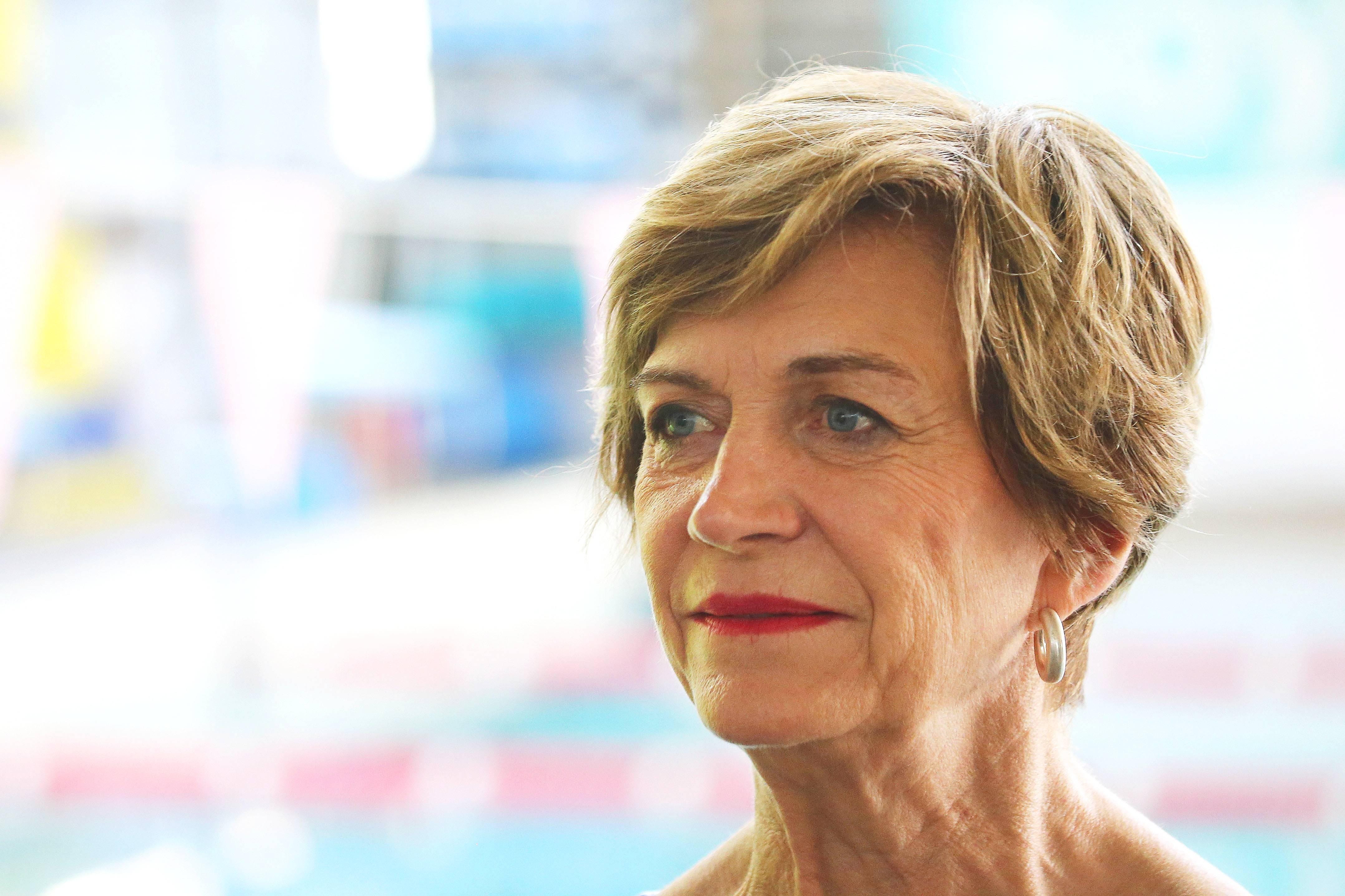
In the lead is Evelyn Matthei, backed by the UDI and RN, those two perpetual partners of post-Pinochet politics.
A moderate centre-right figure, Matthei was an economics lecturer and failed concert pianist who entered politics during Chile’s transition to democracy. She attended the German School in Santiago, was raised Lutheran, and in her childhood was friends with socialist former president Michelle Bachelet as their fathers were both air force generals. (The elder Matthei, a member of Pinochet’s military junta, admitted in a television interview that he “did everything possible so that Argentina would lose” the Falklands war.)
Matthei is essentially the dull-but-reliable won’t-muck-anything-up-but-probably-won’t-achieve-much candidate. Evidence: she is being bigged up by The Economist. She may be an exception to the usually reliable rule of ‘Everything The Economist Supports is Bad’ because she has so little content that there is not much to object to.
Perhaps Chile deserves a period of calm, but she needs to reassure voters that she can tackle their deep-seated concerns over crime and immigration. Her campaign has launched strongly on these issues, so she may yet succeed.

Next highest in the polls is Johannes Kaiser.
His grandfather was a Social Democrat from Wurtemberg who fled Hitler’s Germany, arriving in Chile in 1936. Kaiser is a self-described “reactionary” libertarian whose YouTube channel gained over a 100,000 followers supporting gun rights and opposing illegal immigration. He, too, studied at the Deutsche Schule Santiago, as well as its Catholic rival the German school Sankt Thomas Morus (named after the “Man for All Seasons” by its anti-Nazi founders), before finishing up his secondary studies at the Escuela Militar.
After studying in Santiago and Heidelberg without taking a degree, Kaiser moved to Austria where he worked as a waiter, hotel receptionist, restaurant manager, construction worker, and other odd jobs. He and his wife are both Eastern Orthodox. Kaiser was elected to Congress for the hard-right Republicanos but split off to form his own National Libertarian Party.
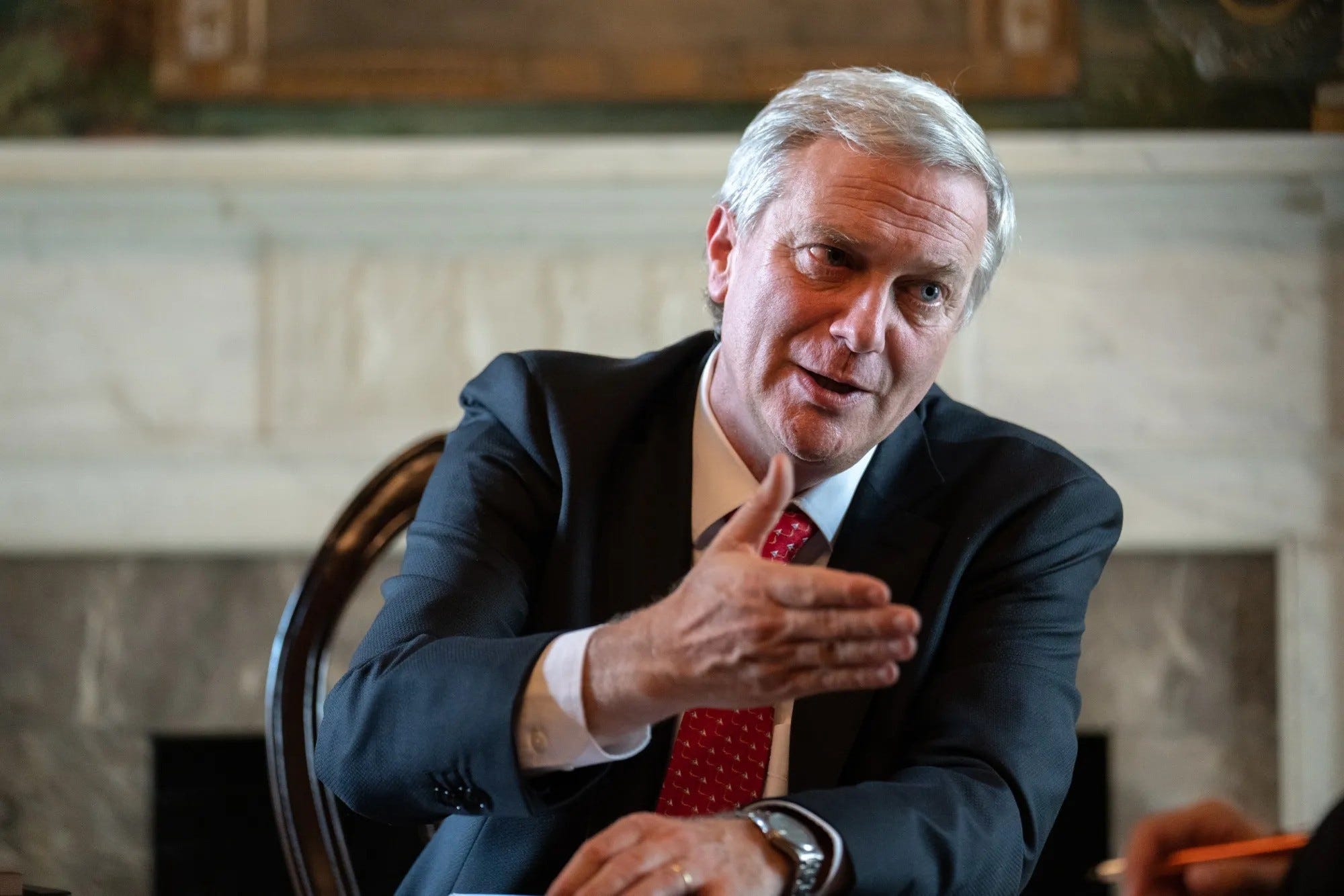
Third in the polls currently is the Republican candidate José Antonio Kast.
“JAK” won the first round of the previous presidential election in 2021 but lost out to leftist Gabriel Boric in the second round. His father was a Bavarian Nazi who fled to Chile in 1950 and started a successful sausage company that earned the family millions.
Kast split from the moderate conservative UDI because he thought they were being mean about Pinochet; he ran as an independent in the 2017 presidential election before founding the Partido Republicano in time for his 2021 bid. After a far-leftist attempt to rewrite Chile’s Pinochet-era constitution was resoundingly rejected in a referendum, the PR had a phenomenal success in the following elections for a council to draft a new proposal, which was also rejected when put to the voters.
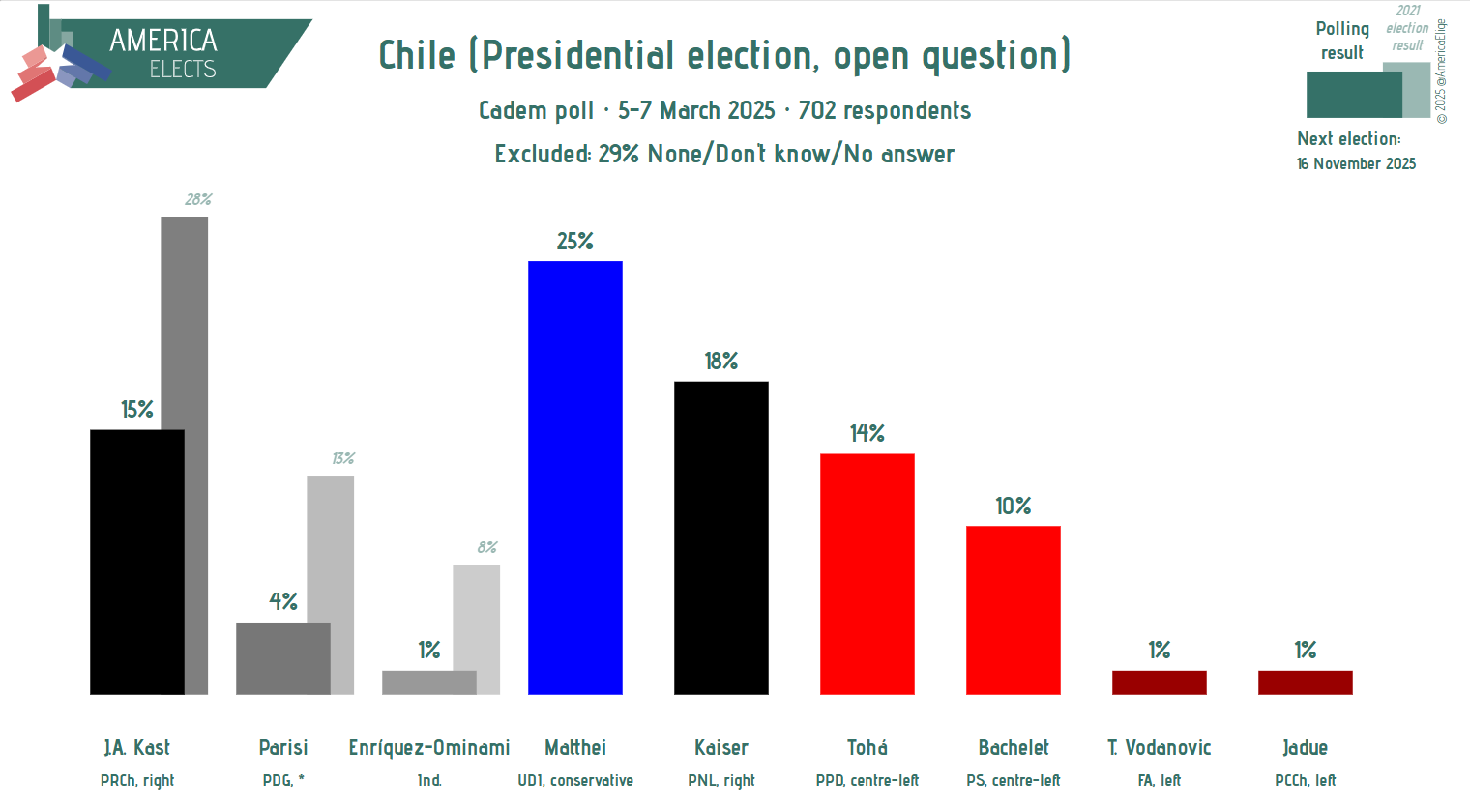
The latest poll has Matthei at 25 per cent, Kaiser at 18 per cent, and Kast at 15 per cent.
Close at JAK’s heels is Carolina Tohá — finally, a non-German — supported by the progressive PPD and the country’s official Socialist Party. Her grandfather was an immigrant from Catalonia. Tohá inherited her politics from her socialist father, José Tohá, who served as interior minister under Allende and was then murdered by the ’73 regime.
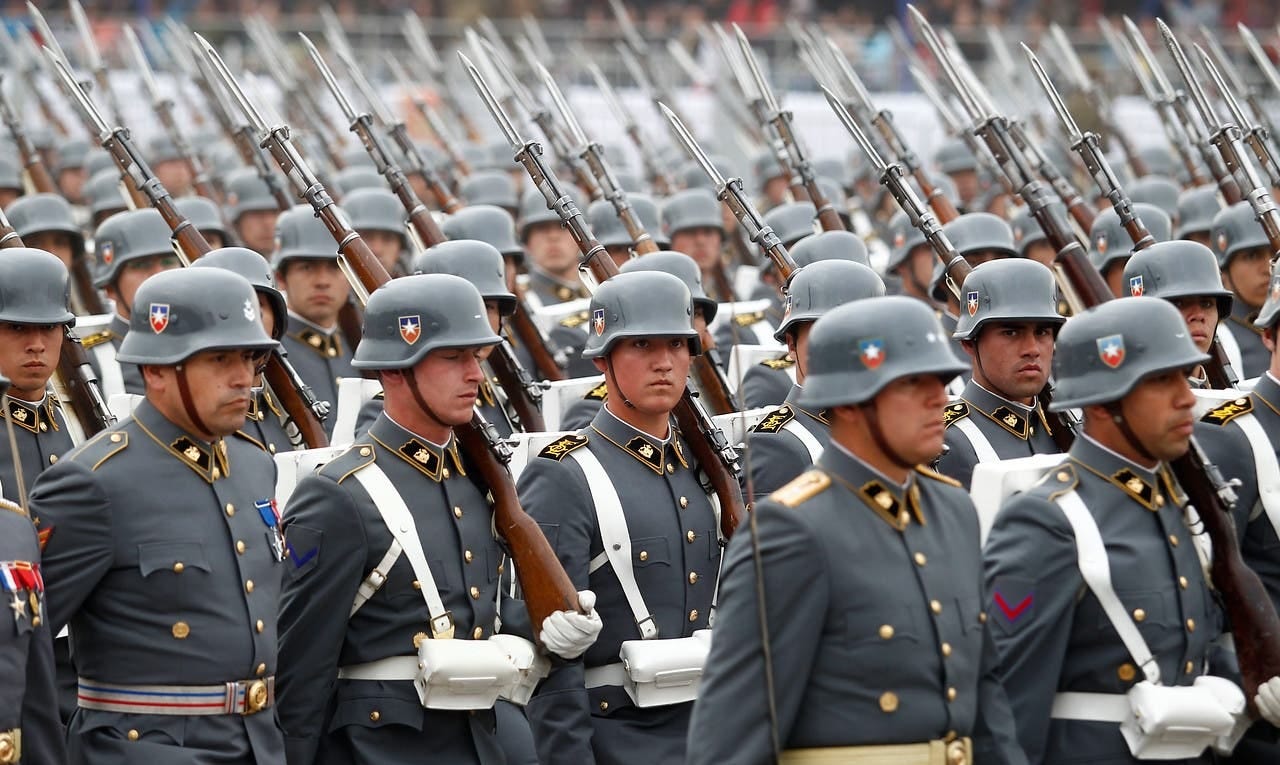
German sway in Chile is not just a mid-century phenomenon. After an early period of French professional influence, Chile’s governing class largely moved towards adopting Prussian models in the late nineteenth century. This helps explain why the Chilean army features goosesteps and pickelhaube, whereas Peru’s prefers the French képi. (Colombia likes pointy helmets, too.)
And Chile isn’t the only country that has turned to Germans. The United States had Eisenhower, after all — not to mention Nimitz and Kissinger — and the first leader of Communist Czechoslovakia was Klement Gottwald. Romania’s outgoing president (the former mayor of Hermannstadt) is from the country’s once numerous but now tiny German-speaking minority. Of course, there’s Argentina: perhaps the less said about the family Kirchner, the better.
Who will emerge victorious when the election takes place this November?
At the moment, it may look like the race is Matthei’s to lose.
If she makes it to the second round, she could be faced by either far-right Kast or far-right Kaiser, which will win her many centrist and centre-left voters — though the far left will stay home (or, more likely, riot).
But the poll cited above shows ex-president Bachelet as a potential candidate, and she has now said she won’t be standing. Most of Bachelet’s support would naturally go to Tohá, who may prove pretty competitive in the second round against Matthei.
A week is a long time in politics, and there’s still eight months to go.

Wonderful. All very Tintin and the Picaros. Where’s General Tapioca when you need him?
This is weird to me cause the Chile I saw was very mixed race. I didn’t go to Santiago when I was in Chile but I saw the North, the lakes and Magallanes regions and I didn’t see any Germans. Most people looked mixed. Maybe the power is massed in the centre of the country.
That being said with what’s going on in northern Chile now, you can see why the right would be so popular. Totally overrun by immigrants and crime, probably the roughest place I’ve been in the Spanish speaking conosur, on par with Brazil but no where near as bad.